
The short answer
A gas detection system should follow a written cause and effect plan. A low alarm typically warns people and starts ventilation. A high alarm typically triggers evacuation alarms and shuts off gas or equipment. A sensor fault should be treated as a problem that gets attention, never ignored.
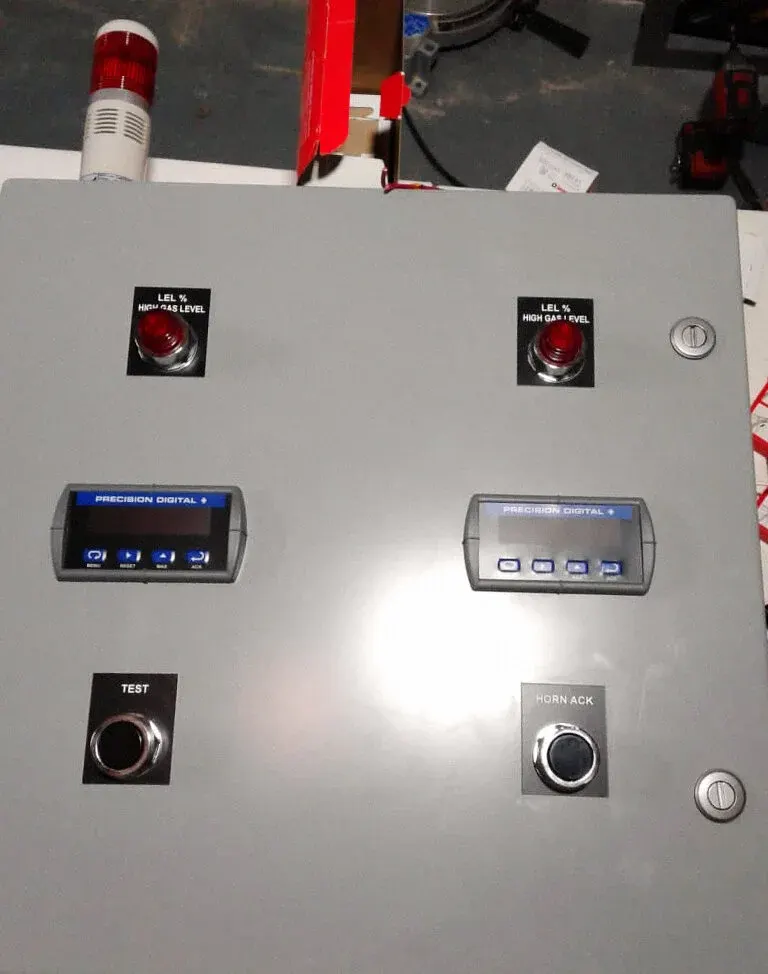
Example cause and effect
| Event | Typical response |
|---|---|
| Low alarm | Local light and horn, start ventilation, notify operators |
| High alarm | Evacuation signal, close gas valve, stop affected equipment |
| Sensor fault | Fault indication and notification to maintenance |
| Power loss | The system fails to a defined, safe condition |
This is an example. Your actual alarm levels and actions must come from your risk assessment, the gas involved and applicable codes.
Decisions to make before building
- What happens when an alarm clears: does it reset automatically or manually?
- Who needs to be notified, and how?
- Where should horns and beacons go so people will notice them?
- How will alarms be tested without shutting down production?
- Should the detection system stay independent of the process PLC?
General information only, not engineering or safety advice. Confirm requirements for your site with a qualified professional. See our legal disclaimer.