
The short answer
If a toxic or flammable gas could reach a dangerous level where people work, or oxygen could be displaced, gas detection should be assessed. Breweries, ammonia refrigeration plants, parking garages, boiler rooms, labs and wastewater sites commonly use it. Your code requirements depend on the site, so have them confirmed.
Common sites and gases
| Facility | Gases usually monitored |
|---|---|
| Breweries and beverage plants | Carbon dioxide |
| Food plants and cold storage | Ammonia |
| Parking garages | Carbon monoxide, nitrogen dioxide |
| Boiler and mechanical rooms | Natural gas, carbon monoxide |
| Laboratories | Oxygen depletion, specialty gases |
| Wastewater facilities | Hydrogen sulphide, methane |
| Battery rooms | Hydrogen |
How to find out what applies to you
Requirements can come from the building code, refrigeration or fuel codes, occupational health and safety rules, your insurer or your own risk assessment. A safety consultant or engineer can confirm which ones apply and where sensors should go.
What a system includes
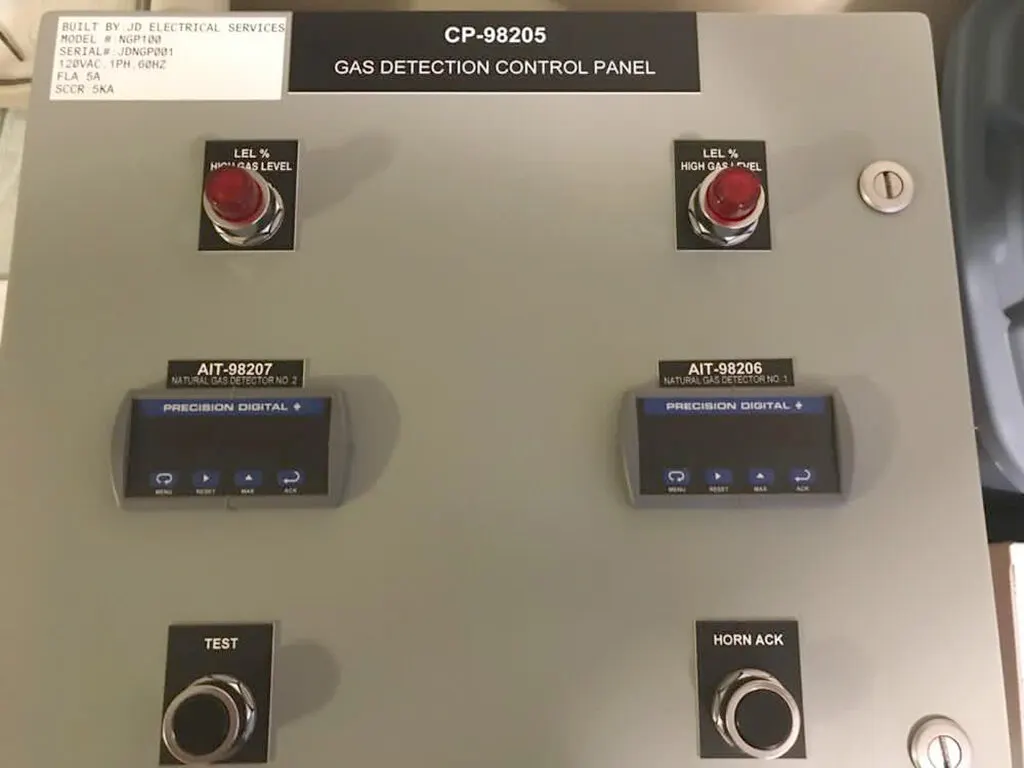
Most systems combine sensors, a control panel with readouts, audible and visual alarms, and outputs that start ventilation or shut equipment down.
General information only, not engineering or safety advice. Confirm requirements for your site with a qualified professional. See our legal disclaimer.