
The short answer
An explosion-proof enclosure contains an internal ignition. A purged panel keeps flammable gas out using pressurized clean air or inert gas. An intrinsically safe circuit limits energy so it cannot ignite the atmosphere. Many hazardous-area systems use a combination, chosen to suit the area classification and the equipment.
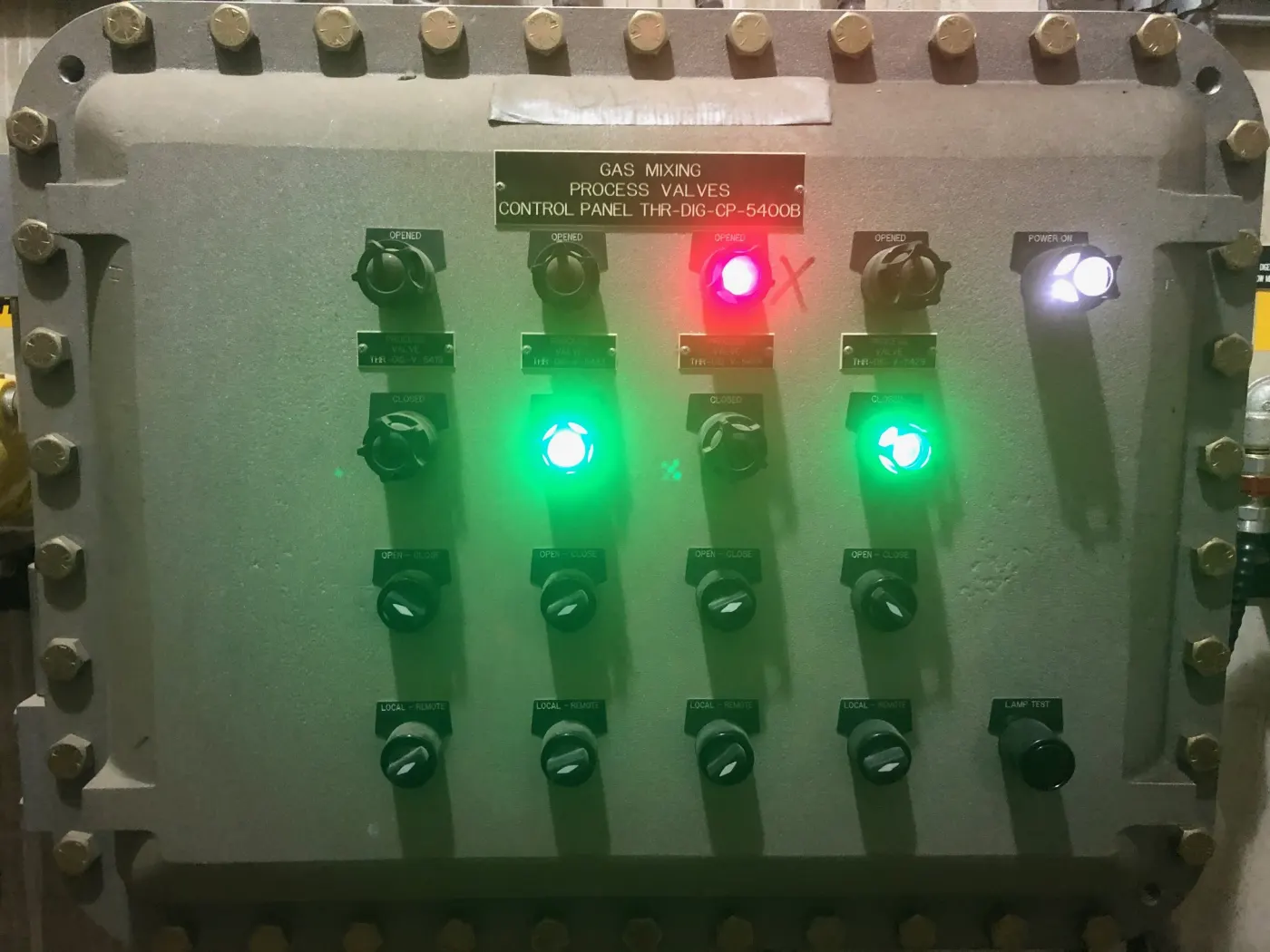
Side by side
| Method | How it protects | Good for | Keep in mind |
|---|---|---|---|
| Explosion-proof | A heavy enclosure contains an explosion and cools escaping gases | Local controls, pilot lights and starters | Heavy, and must be bolted shut to stay protected |
| Purged or pressurized | Positive pressure keeps the gas out | Larger panels and devices that give off heat | Needs a reliable clean air or inert gas supply |
| Intrinsically safe | Limits the energy in a circuit | Sensors, switches and transmitters | Low-power signals only, with barriers in the safe area |
How the choice gets made
Start with the area classification and the gas or dust involved. Then consider how much equipment needs to be in the hazardous area at all. Moving the PLC and power equipment to a safe area and bringing only field signals into the hazardous area can simplify a design.
The final selection should be confirmed by a qualified engineer against the Canadian Electrical Code and your site’s classification drawings.
General information only, not engineering or safety advice. Confirm requirements for your site with a qualified professional. See our legal disclaimer.