
The short answer
A relay logic panel should be upgraded to a PLC when faults take too long to find, spare parts are getting hard to source, or the machine needs a change that would mean rewiring. If none of those apply and the panel is reliable, there may be no reason to touch it yet.
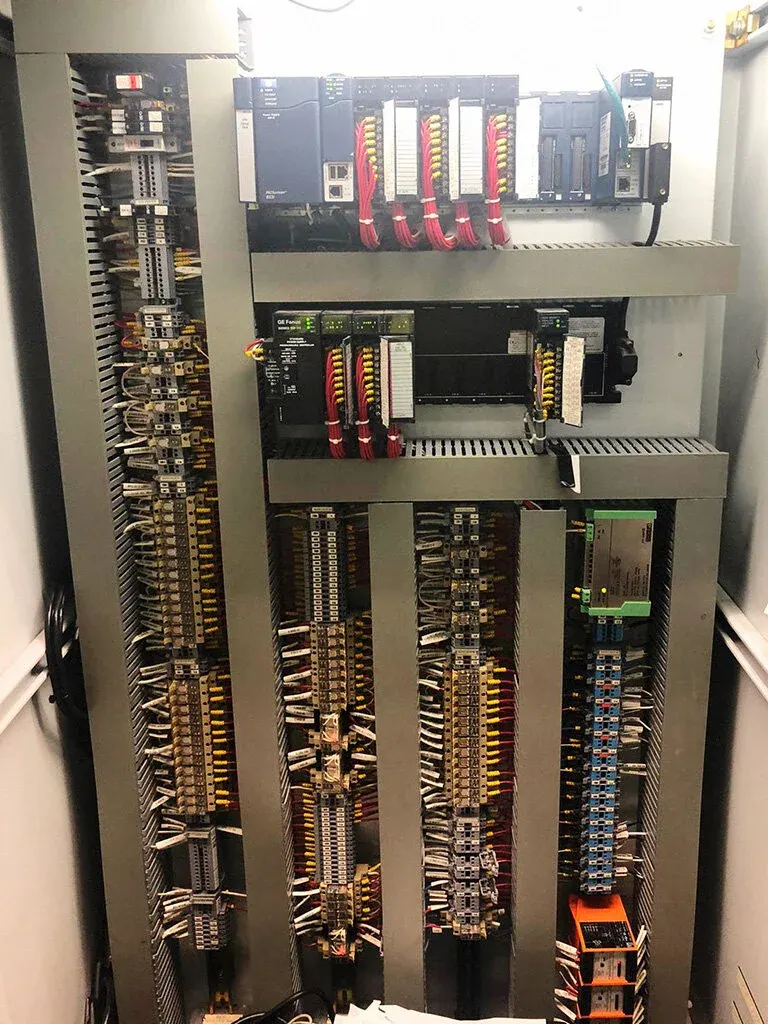
Signs it is time
- Troubleshooting takes hours. A relay panel gives you no history of what happened. A PLC can show which input dropped out and when.
- Parts are obsolete. Older relays, timers and counters get harder to replace, and one failure can stop a machine for days.
- Changes mean rewiring. On a PLC, adding a delay or an interlock is a change in the program.
- Nobody has current drawings. Panels that have been modified for decades rarely match their prints.
- You need data or remote status. Relay logic cannot report counts, alarms or run time to anything else.
What to check first
Confirm what the panel actually does today, including any undocumented changes. Count the inputs and outputs, check the condition of the field devices and wiring, and find out how long the machine can be down. Those answers decide whether you can reuse parts of the existing panel or need a full replacement.
What the upgrade usually involves
- Tracing the existing logic and documenting how the machine should run.
- Designing the new panel and PLC program.
- Building and testing the panel before the shutdown.
- Installing it, landing the field wiring and commissioning the machine.
General information only, not engineering or safety advice. Confirm requirements for your site with a qualified professional. See our legal disclaimer.