
The short answer
Usually not all at once. Many plants migrate in stages, replacing the processor and I/O while keeping the field wiring and sometimes the enclosure. The right path depends on how critical the machine is, how long it can be down and whether spare parts are still available.
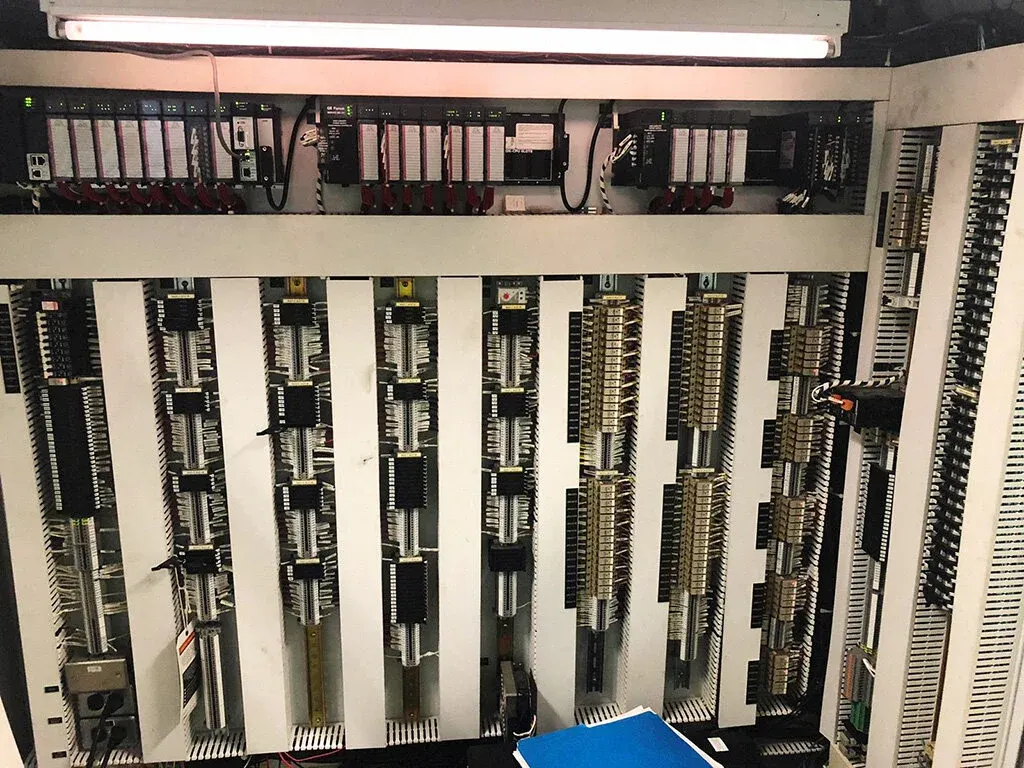
Your three options
| Option | Works best when | The tradeoff |
|---|---|---|
| Stock spare parts | The machine has a few years left and spares can still be found | Lowest cost now, and the risk stays |
| Phased migration | The machine is staying and shutdown time is limited | Spreads out cost and downtime, with more planning |
| Full replacement | The panel or wiring is also in poor shape, or the process is changing | Largest project, and the cleanest result |
How to decide
- Check the product’s lifecycle status with your distributor. Older platforms such as the Allen-Bradley PLC-5 and SLC 500 are worth checking first.
- Work out what one day of downtime costs on that machine.
- Find out how long a replacement processor would take to arrive today.
- Back up the existing program now, whichever path you choose.
What can usually be kept
Field devices, motors and much of the field wiring can often stay. The program generally needs to be converted and tested instead of copied across, so a migration is also a good time to remove old workarounds and add better fault messages.
General information only, not engineering or safety advice. Confirm requirements for your site with a qualified professional. See our legal disclaimer.